
History of Sahanperä
This is where Rovaniemi began — in the sawdust and echoes of Sahanperä. Where the river carried dreams, and the sawmill turned silence into voices. And where, from old bricks and forgotten stairs, a house of stories rose — still breathing, still remembering.
Arctic book experiences
house of stories
The story of Sahanperä
Guesthouse Sahanperä was not built in the ordinary way. Its walls rose from the old bricks of a bank —bricks that once carried the weight of promises, losses, and decisions. Even the stairs were
brought here, the very steps where people once climbed toward power. Placed on the ground of Sahanperä — the birthplace of Rovaniemi,
where the sawmill once turned silence into voices — the house became something more. It did not only stand. It began to breathe.
1
Where it all began
Sahanperä is more than a name. It was here, by the Ounasjoki river, that Rovaniemi began to take shape. Long before the city grew around it, this ground echoed with the rhythm of saws and the voices of workers who built their lives from timber and dreams..
In the late 19th and early 20th century, Sahanperä was the beating heart of the region’s sawmill industry. Logs floated down the river, men labored by the blades, and families built their homes around the saw. It was here that silence became livelihood — where raw wood turned into hope for a town that would become Rovaniemi. The sawdust has long settled, but the memory of those first sparks of life still lingers in the ground. And it is on this very ground that Guesthouse Sahanperä now stands — carrying the weight of that history, and weaving it into new stories.
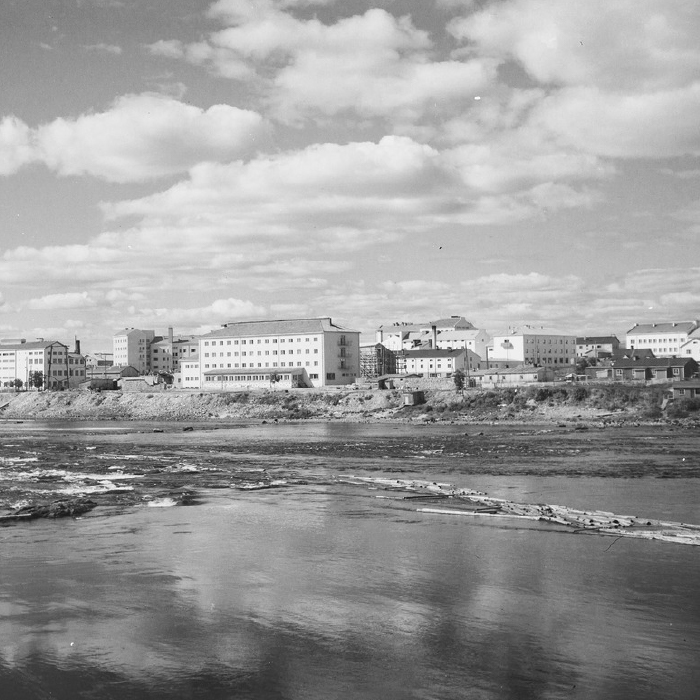
Poutvaara, Matti, 1950–1959
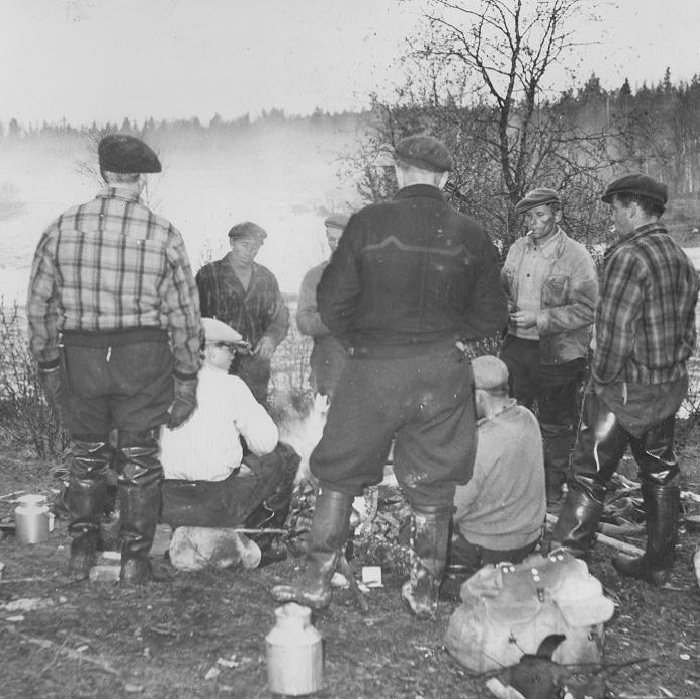
Lusto – Suomen metsämuseo
2
Where the river fed the saws
By the late 1800s, Rovaniemi had become a northern hub for timber procurement. In the early 1900s, the first local industrial plants were steam-powered frame saws — and the name Sahanperä (“Sawmill Corner”) stuck even after the blades fell silent. Expo / Tiedekeskus Pilke
Logs floated down the Kemijoki, men worked the booms and yards, and families built their lives around the mills. Sawmilling and forest work shaped the town’s growth and identity — Rovaniemi evolved from river settlement to a regional centre on the strength of wood. historia.rovaniemi.fi
In the prohibition years (1919–1932), smuggling and covert drinking spread across Finland — river towns of the North were no exception, and the era left its own stories behind
3
The house that was carried here
This house was not built from new plans — it was carried here. Brick by brick, step by step, from the remains of an old bank. Each brick once heard the echoes of decisions, debts, and quiet goodbyes. Each stair once led to power — and now, it leads to stories. When these old bones met the soil of Sahanperä — the birthplace of Rovaniemi — something happened. The house did not simply stand. It began to breathe.
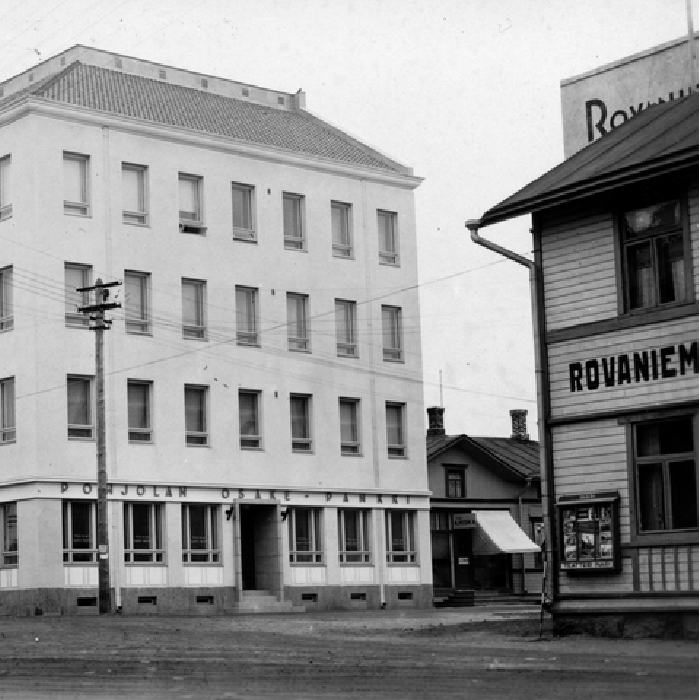
Unknown, 1936–1944
4
The one who never left
No one remembers when he came here.
Or whether he came at all. Some say he was already here — watching quietly — before the first brick touched the ground.
He doesn’t speak.
He doesn’t move.
Yet somehow, he’s everywhere.
In the sound of the floorboards,
in the stories the walls remember.
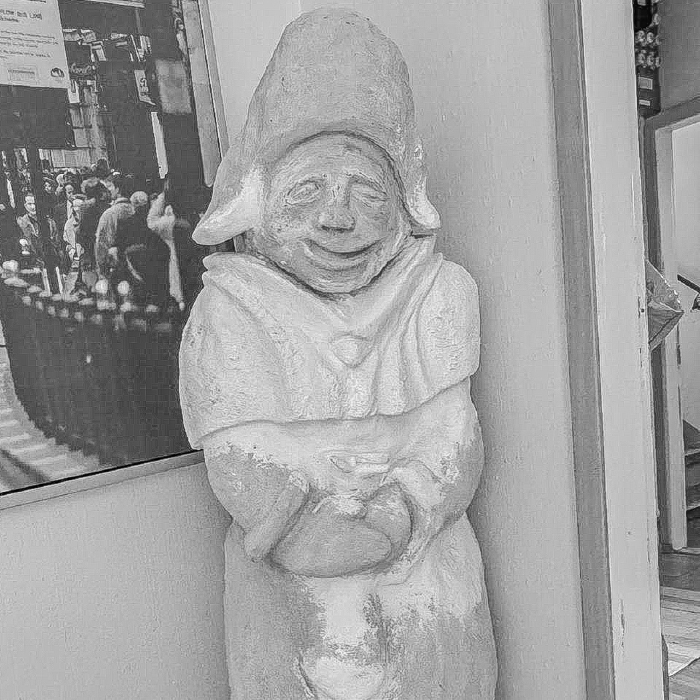
They call him Vanha Turi —
the silent keeper of the house,
and of all who have passed through it.